

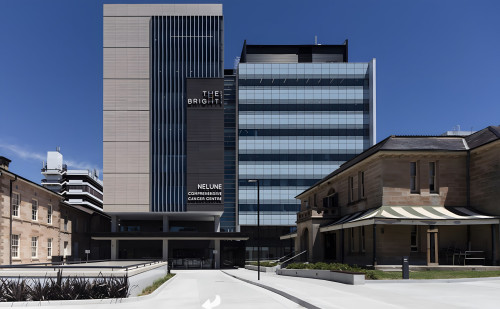
This month, we are proud to celebrate the radiosurgery team at Prince of Wales Hospital in Randwick, Australia, for transforming the arteriovenous malformation (AVM) care they provide. They’ve done this by adopting frameless radiosurgery with digital subtraction angiography (DSA), enabled by Brainlab Elements Image Fusion Angio and Elements SmartBrush Angio.
Having now treated over 100 AVM patients using this dedicated workflow, the team recognizes both the departmental impact and scalability of this innovative approach in routine practice.
The challenge: Complex targets, logistical constraints. An AVM is an abnormal tangle of blood vessels for which radiosurgery can be a treatment option for select patients. Historically, AVM radiosurgery has relied on rigid immobilization with stereotactic head frames for accurate patient positioning and co-registration of multiple imaging studies, including 2D DSA and 3D image scans.
This traditional, frame-based process can lead to:
- Patient discomfort from invasive frame placement and wearing a frame throughout a full treatment day
- Logistical demands for the clinical team to schedule different imaging modalities with subsequent treatment planning and delivery the same day
- Repeat invasive angiography for treatment planning purposes
The innovation: Frameless treatments for AVM that incorporate DSA imaging. In a first for Australia, the team implemented Brainlab Elements solutions for angiography/DSA, a frameless approach for planning AVM treatments. With Elements Image Fusion Angio, multiple 2D DSA images can be co-registered using cerebrovascular structures with 3D planning CT or MR images. Clinicians can thereby simultaneously outline vascular targets in 2D and 3D datasets. The software also supports diagnostic 2D DSA images without requiring an additional frame-based angiography procedure.
This workflow enables:
- AVM contouring using multiple imaging modalities, including 2D DSA to improve visualization and spatial resolution of the nidus
- A more flexible schedule for imaging sessions
- Use of diagnostic 2D DSA which can omit the need for additional invasive procedures on the day of treatment
In their words: “For our most complex cases, this technology allows us to utilise catheter cerebral angiograms from different angles and switch between DSA and CT or MRI to precisely define the AVM nidus. The seamless switching between imaging modalities, and the ability to see volume adjustments instantly, has fostered a new level of confidence and standard of collaboration between our neuroradiology and radiation oncology colleagues and ensures we are delivering the most accurate plan possible.” – Andrew Cheung, Head of Department Interventional Neuroradiology, Prince of Wales Hospital
Why it matters. This shift isn’t just about better technology—it’s about a better experience. The team has created what they describe as: “a streamlined, frameless workflow while improving:
- Patient comfort
- Staff efficiency
- Treatment timelines and resource use”
Please join us in congratulating the Prince of Wales Hospital Radiosurgery Team, and in recognizing how innovation—when paired with dedication—can change what’s possible for complex AVM care.
*The statements made by the clinician represent their personal opinion and experience. These statements may not be supported by scientific evidence or peer-reviewed research. For verified information about the device, please refer to the manufacturer's official documentation.

From a clinical workflow and technology standpoint, I was wondering—given the geometric limitations in ring gantry systems, is the likely direction toward surface imaging with AI-based prediction, or are there ongoing developments for internal tracking within closed-bore architectures?
First of all thank you for this platform.
May i know Sir from your experience, what are the most effective strategies for managing intrafraction motion during SBRT, particularly in spine and lung cases?



Join us in Philadelphia for our Mid-Atlantic Regional Symposium with insightful clinical talks by renowned clinical experts and inspirational discussions on SRS and SBRT.
Experience cutting edge of radiotherapy and radiosurgery at our exciting two days symposium focused on precision, personalization, and standardization in Stereotactic Radiosurgery (SRS) and Stereotactic Body Radiation Therapy (SBRT).
This event will bring together medical physicists, dosimetrists, radiation oncologists and radiation therapists to share valuable clinical techniques and innovative management strategies, as well as to gain insights into how complex data is reshaping the field of radiosurgery.
Brainlab Mid-Atlantic Regional Symposium
May 8 and 9, 2026
Click here to have the program.
We look forward to welcoming you to Philadelphia for this inspiring event!
To register click here

Big News! 🎉 We are excited to announce that the Brainlab Novalis Circle 10th International Conference is happening on September 17-19, 2026, in the vibrant city of Munich, Germany!
Mark your calendars and get ready for two full days of cutting-edge scientific talks and thought-provoking discussions, featuring some of the most brilliant minds in the world of stereotactic radiosurgery and stereotactic body radiation therapy.
It’s going to be an unforgettable event, and we can’t wait to see you there!
You can find more information here: Novalis Circle Conference 2026 | Brainlab

The Brainlab Academy is pleased to host the "Clinical Fundamentals of ExacTrac Dynamic" course in cooperation with Klinikum der Universität München LMU.
This course is a comprehensive training program designed to demonstrate the versatility of ExacTrac Dynamic for different indications. During the course, you will learn general positioning and monitoring strategies for cranial and extracranial indications. The course will also cover dedicated breath-hold techniques and implanted marker tracking. During the hands-on session, you will receive tips and tricks from experienced Brainlab trainers and clinical users. More information here.
Interested? Contact your local Brainlab Sales representative.
*Please note: A Brainlab Academy ticket is needed to be able to attend this course.

Exciting News!
Join us in Nashville, Tennessee for the Brainlab Regional Symposium happening November 14 and 15, 2025!
This 2 day symposium will bring together clinicians, physicists, and innovators from across the region to explore the latest breakthroughs in radiation oncology, featuring Brainlab’s cutting-edge SRS and SBRT solutions. From cranial SRS to extracranial treatments like DIBH breast, prostate, and lung applications — there's something for every aspect of clinical practice.
Agenda is coming soon
Click here to register
Looking forward to seeing you there!
Join the Symposium!
The Brainlab UK & Ireland Radiotherapy Symposium 2024 will focus on precision, personalization and evolution in radiotherapy and radiosurgery.
Led by the Charing Cross Hospital team, this meeting is an opportunity for clinicians, medical physicists and radiation oncologists to share insights on clinical techniques, exchange management approaches, tools and the use of big data in radiotherapy and radiosurgery treatments.
Attendees have the opportunity to take part in scientific talks, live demonstrations and informative discussions.
We look forward to seeing you all in London!
To register click here
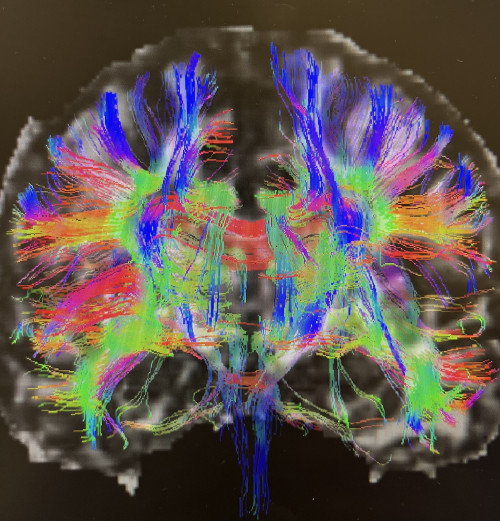
You are being invited to take part in a 15-minute survey assessing how radiation therapy and radiosurgery departments (including C-arm Linacs, Gammaknife, CyberKinfe, etc) , utilise MRI fibertracking (also known as MRI tractography) in their practice. (Link below)
This study is being run by Physical Sciences Department of Peter MacCallum Cancer Centre, Melbourne, Australia.
Upon request, we will provide you with the full anonymised survey results so that you can compare your practice with other participants.
This project has been approved by the Peter MacCallum Cancer Centre Ethics Committee (ethics@petermac.org).
If you have any questions, please don’t hesitate to send an email.
Participation agreement:
By clicking the link below, I agree to participate in this survey.
https://redcap.petermac.org.au/surveys/?s=AP4884J787EJRTLF
Thanks


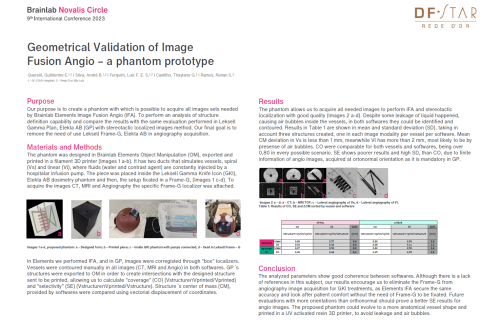
@Guilherme Querelli , Andre B. Silva, Luiz F.E.S. Furquim, Thaylane G. Castilho, Renan S. Ramos
DF STAR Hospital - Rede D'Or Sao Luiz
Together with our partner Varay, we are pleased to invite you to our Israel User Meeting in HERZLIYA ON SEA in Tel Aviv.
This meeting is an opportunity for clinicians, medical physicists and radiation oncologists to share clinical techniques and discuss management approaches, tools and Big Data insights in primary and metastatic oncological radiotherapy treatment.
We are thrilled to have the chance to reconnect with you in person.