



We’re pleased to host the Brainlab Academy course “Clinical Fundamentals of ExacTrac Dynamic” in cooperation with the clinical team of The Valley Hospital.
This course is a comprehensive training program designed to demonstrate the versatility of ExacTrac Dynamic for different indications. During the course, you will learn general positioning and monitoring strategies for cranial and extracranial indications. The course will also cover dedicated breath-hold techniques and implanted marker tracking. During the hands-on session, you will receive tips and tricks from experienced Brainlab trainers and clinical users.
More information here: https://www.brainlab.com/radiosurgery-products/academy/advanced-clinical-course/
Interested? Contact your local Brainlab Sales representative.
*Please note: This course is for US-customers only. A Brainlab Academy ticket is needed to be able to attend this course.
Case: Brainlab Cranial planning, generate a 5 arcs plan, when export to Mosaiq then TrueBeam, Arc 2 MLC error message, MLC invalid, dose anyone out there encounter this error before? Any input is appreciated


We’re pleased to host the Advanced Clinical Course “ExacTrac Dynamic for Breast Cancer” in cooperation with the Universitair Ziekenhuis Brussel and the clinical team of Thierry Gevaert, PhD.
This course is a comprehensive training program aimed at supporting the use of ExacTrac Dynamic for breast cancer treatments. Attendees will learn about specific imaging, CT simulation, breath-hold techniques, and general strategies for treating breast cancer and will familiarize themselves with using the ExacTrac Dynamic Breath-Hold modules.
More information here: https://www.brainlab.com/radiosurgery-products/academy/advanced-clinical-course/
Interested? Contact your local Brainlab Sales representative.
*Please note: A Brainlab Academy ticket is needed to be able to attend this course.

We’re pleased to host the Advanced Clinical Course “Functional Indications” in cooperation with Centre Hospitalier Princesse Grace and the team of Dr. Cécile Ortholan and Benjamin Serrano, PhD.
This Advanced Clinical Course offers a unique opportunity for participants to gain valuable insights from clinical experts on the successful delivery of high-dose functional treatments. As part of the two-day program, attendees will spend time on-site the reference hospital, where they will have the opportunity to engage in discussions with medical physicists, radiation oncologists, and neurosurgeons - focusing on key aspects such as contouring, targeting, and treatment planning.
More information here: https://www.brainlab.com/radiosurgery-products/academy/advanced-clinical-course/
Interested? Contact your local Brainlab Sales representative.
*Please note: A Brainlab Academy ticket is needed to be able to attend this course.

We’re pleased to host the Advanced Clinical Course “Refresher and Refinement of Planning Skills”.
This Advanced Clinical Course is designed as a comprehensive training program to refresh and refine planning skills for RT Elements, with a focus on complex radiosurgery cases and advanced plan optimization techniques. The course will also address machine profile improvement and provide an outlook on future treatment approaches. During the hands-on sessions, participants will gain practical tips and refined strategies from experienced trainers and clinical users, supporting more efficient and precise planning workflows.
More information here: https://www.brainlab.com/radiosurgery-products/academy/advanced-clinical-course/
Interested? Contact your local Brainlab Sales representative.
*Please note: A Brainlab Academy ticket is needed to be able to attend this course.
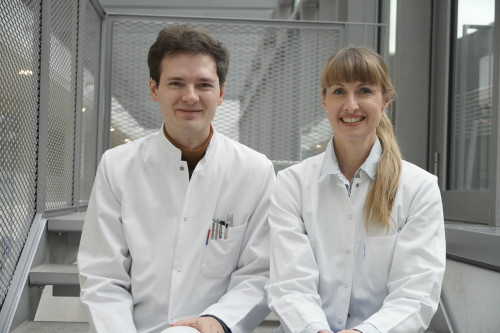
At the University Hospital for Radiation Oncology Innsbruck, prostate cancer treatment is built on precision and teamwork. Treating 15–20 patients each day, the department has refined an implanted marker workflow that gives clinicians full control over imaging and positioning. Under Professor Ute Ganswindt’s leadership, the team has made accuracy a shared focus across every step of care.
The challenge: motion that doesn’t wait - Even in treatments lasting only a few minutes, the prostate can shift without warning. In Innsbruck, this unpredictable movement appeared in one third of monitored sessions. Small deviations could accumulate across a VMAT arc with the potential to affect dose coverage and increase toxicity. To move toward shorter, more efficient treatment schedules, the team needed a way to quantify and correct that motion reliably in real time.
The innovation: an implanted marker workflow built for precision - Using the Brainlab ExacTrac Dynamic implanted marker workflow, the Innsbruck team was able to detect and correct for prostate motion. Continuous X-ray monitoring of fiducial markers helped clinicians maintain target alignment throughout treatment and prevent deviations from building over time. With marker implantation performed directly within the radiation oncology department, the workflow also allowed seamless integration with imaging and planning protocols and ensured strong ownership of each step.
The shift: confidence to move toward ultra-hypofractionation - With precise, reliable motion management in place, the team began transitioning from conventional and moderately hypofractionated regimens to ultra-hypofractionated protocols. Their goal was clear: shorten the overall treatment pathway while maintaining the accuracy necessary to protecting nearby healthy structures and minimizing toxicity. The established collaboration across teams and the efficiency and precision of the implanted marker workflow provided the necessary foundation to make that shift safely.
In their words: “Progress like this only happens when everyone is aligned around the same goal: delivering precise, reliable care for every patient, every day. The collaboration across teams and the efficiency of the implanted marker workflow provided the foundation we needed to make that shift safely.” – Dr. Angela Ginestet, Radiation Oncologist, University Hospital for Radiation Oncology Innsbruck.
The impact: precision that supports patient-centered treatments - A recent evaluation from the University Hospital for Radiation Oncology Innsbruck confirmed that the implanted marker workflow with ExacTrac Dynamic accurately identified and corrected clinically relevant motion during prostate treatments. For a department committed to delivering precise care at high daily volumes, this capability is helping shape a future where shorter treatment schedules can coexist with uncompromised accuracy.
Please join us in celebrating the Innsbruck team for leading the way toward ultra-hypofractionated prostate cancer care. If you want to learn more about their work, read the study here: https://pubmed.ncbi.nlm.nih.gov/37523057/
Picture: ©Tirol Kliniken Innsbruck, Dr. Julian Mangesius, Dr. Angela Ginestet, University Hospital for Radiation Oncology, Innsbruck, Austria
The statements made by the clinician represent their personal opinion and experience. These statements may not be supported by scientific evidence or peer-reviewed research. For verified information about the device, please refer to the manufacturer's official documentation.
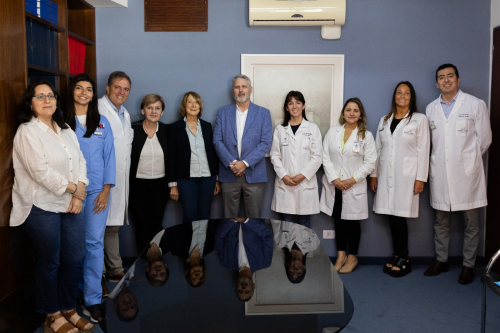
For more than a decade, Instituto Zunino in Córdoba, Argentina has been recognized as a regional reference center for high-precision radiotherapy. Built on long-standing clinical expertise and a strong culture of quality, the center has developed a mature SRS and SBRT program that continues to evolve through structured processes, external validation and a commitment to shared learning.
The team’s journey with Brainlab technology began in 2009 with iPlan RT and expanded in 2011 with ExacTrac X-Ray. Today, RT Elements is clinically adopted across the department of four treatment machines, supported by ExacTrac Dynamic—forming the technical backbone of daily practice.
A benchmark for quality: Novalis Certification
At Instituto Zunino, maintaining excellence means welcoming independent evaluation. First Novalis Certified in 2016, and successfully re-certified in 2020 and 2025, the team has consistently demonstrated its commitment to quality, safety and transparency. The most recent re-certification reinforces the center’s alignment with international standards and its place within the Novalis Certified community.
Why certification matters—in their own words
Silvia Zunino, MD, PhD, Director and Founder of Instituto Zunino and Fundación Marie Curie, explains: “Novalis Certification confirms that we work according to the same standards as leading centers in the United States and Europe. It gives us confidence in our methods and supports continuous improvement.”
Daniel Venencia, PhD, Head of Medical Physics, adds: “Even as an experienced institution, having our work audited helps us identify opportunities to improve. Clearly defined protocols and external review ensure our patients receive the best possible treatment.” Motivated by his commitment to excellence in SRS and SBRT and to support his colleagues, Daniel Venencia has now joined the Novalis Certification Program team as an auditor.
Beyond the clinic: sharing expertise to advance the region
Instituto Zunino’s impact extends beyond its own walls. Through Fundación Marie Curie, the team actively supports regional development by sharing protocols, workflows and clinical experience with the wider medical community. Every two years, the foundation hosts an internationally recognized SRS & SBRT congress (Congreso sobre Avances Integrados en Oncología, Radiocirugía y Física Médica: Innovación y Precisión en el tratamiento del cancer), bringing together physicians, physicists and researchers for high-level exchange. A dedicated hands-on workshop focused on Brainlab technology offers open insight into clinical workflows, physics considerations and decision-making processes—earning a strong reputation across the region. As Daniel Venencia notes: “Advancing treatment techniques, software, automation and artificial intelligence—and helping others do the same—is how we move the field forward together.”
Stories from the Circle: leadership through openness
Instituto Zunino shows that leadership in radiosurgery and radiotherapy is not defined by outcomes alone. By combining long-standing expertise with education, openness and a sustained commitment to Novalis Certification, the team actively contributes to raising standards across the region.
We’re proud to share Instituto Zunino’s story and to recognize the team’s ongoing commitment to collaboration, clinical rigor and patient-centered care.
The statements made by the clinician represent their personal opinion and experience. These statements may not be supported by scientific evidence or peer-reviewed research. For verified information about the device, please refer to the manufacturer's official documentation.
Picture: ©Instituto Zunino, Córdoba, Argentina

We are pleased to invite you to join our Novalis Circle Lunch Symposium "ExacTrac Dynamic: The Gold Standard for IGRT and SGRT Clinical Applications" at the European Society for Radiotherapy and Oncology (ESTRO) Annual Congress in Stockholm.
We are honored to welcome the following speakers, who will share their latest insights and experiences with Brainlab technology.
Chair: Carmen Rubio Rodríguez, MD, PhD, HM Sanchinarro University Hospital, Madrid, Spain
🎙️ Per Munck af Rosenschöld, PhD, Skåne University Hospital, Lund, Sweden: The Importance of IGRT for Linac-based Radiosurgery
🎙️ Nils Temme, PhD, Strahlentherapie Radiologie München, Munich, Germany: Clinical Versatility of ExacTrac Dynamic Surface in a Tattoo-less Department
🎙️Ovidio Hernando Requejo, MD, PhD, HM Sanchinarro University Hospital, Madrid, Spain: The Role of Motion Management with ExacTrac Dynamic for Prostate SBRT
🎙️Cihan Gani, MD, University Hospital Tübingen, Tübingen, Germany: Modern Lung SBRT Treatments with Both Real-time Adaptation and Intrafraction Motion Management
We look forward to the valuable insights they will present!
