


Les Manip' connectés est un espace de discussion en français destiné aux manipulateurs en radiothérapie.
Vous pourrez y discuter de votre pratique quotidienne, partager vos expériences cliniques, échanger des conseils et astuces, présenter des cas cliniques, poser vos questions et découvrir les bonnes pratiques de vos pairs.
Si vous n'êtes pas encore inscrit au Novalis Circle, cliquez ici pour vous enregistrer. L'inscription est gratuite et ouverte à tous les professionnels de santé.
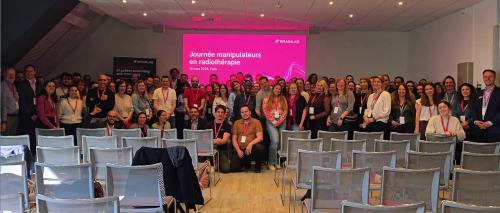
At the heart of the Novalis Circle is community: bringing Radiation Therapy Technologists (RTTs) together—both online and offline—to share knowledge, learn from each other, and continuously advance clinical practice. At the same time, it offers a dedicated space for RTT - focused discussions, peer exchange, and the sharing of real-world clinical workflows - all designed to keep collaboration practical, relevant, and close to everyday practice.
What you can expect from Novalis Circle
- Local events and workshops
- Hands-on, practical learning combined with the opportunity to connect in person.
- Peer-to-peer groups & online masterclasses
- Engage directly with fellow RTTs, exchange insights, and deepen your expertise in interactive formats.
- On-demand content & recordings
- Access valuable content whenever you need it - flexible, relevant, and easy to fit into your daily workflow.
Stronger together
Whether it’s learning, sharing, or innovating - the Novalis Circle connects people, sparks ideas, and supports progress in radiation therapy.
Be part of the community and contribute your experience.


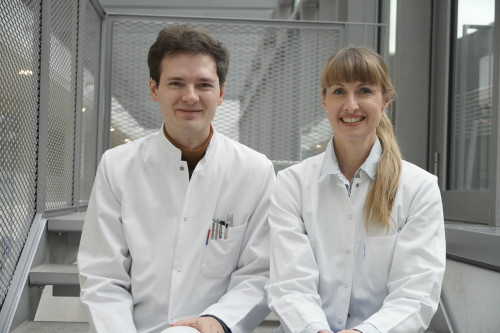
At the University Hospital for Radiation Oncology Innsbruck, prostate cancer treatment is built on precision and teamwork. Treating 15–20 patients each day, the department has refined an implanted marker workflow that gives clinicians full control over imaging and positioning. Under Professor Ute Ganswindt’s leadership, the team has made accuracy a shared focus across every step of care.
The challenge: motion that doesn’t wait - Even in treatments lasting only a few minutes, the prostate can shift without warning. In Innsbruck, this unpredictable movement appeared in one third of monitored sessions. Small deviations could accumulate across a VMAT arc with the potential to affect dose coverage and increase toxicity. To move toward shorter, more efficient treatment schedules, the team needed a way to quantify and correct that motion reliably in real time.
The innovation: an implanted marker workflow built for precision - Using the Brainlab ExacTrac Dynamic implanted marker workflow, the Innsbruck team was able to detect and correct for prostate motion. Continuous X-ray monitoring of fiducial markers helped clinicians maintain target alignment throughout treatment and prevent deviations from building over time. With marker implantation performed directly within the radiation oncology department, the workflow also allowed seamless integration with imaging and planning protocols and ensured strong ownership of each step.
The shift: confidence to move toward ultra-hypofractionation - With precise, reliable motion management in place, the team began transitioning from conventional and moderately hypofractionated regimens to ultra-hypofractionated protocols. Their goal was clear: shorten the overall treatment pathway while maintaining the accuracy necessary to protecting nearby healthy structures and minimizing toxicity. The established collaboration across teams and the efficiency and precision of the implanted marker workflow provided the necessary foundation to make that shift safely.
In their words: “Progress like this only happens when everyone is aligned around the same goal: delivering precise, reliable care for every patient, every day. The collaboration across teams and the efficiency of the implanted marker workflow provided the foundation we needed to make that shift safely.” – Dr. Angela Ginestet, Radiation Oncologist, University Hospital for Radiation Oncology Innsbruck.
The impact: precision that supports patient-centered treatments - A recent evaluation from the University Hospital for Radiation Oncology Innsbruck confirmed that the implanted marker workflow with ExacTrac Dynamic accurately identified and corrected clinically relevant motion during prostate treatments. For a department committed to delivering precise care at high daily volumes, this capability is helping shape a future where shorter treatment schedules can coexist with uncompromised accuracy.
Please join us in celebrating the Innsbruck team for leading the way toward ultra-hypofractionated prostate cancer care. If you want to learn more about their work, read the study here: https://pubmed.ncbi.nlm.nih.gov/37523057/
Picture: ©Tirol Kliniken Innsbruck, Dr. Julian Mangesius, Dr. Angela Ginestet, University Hospital for Radiation Oncology, Innsbruck, Austria
The statements made by the clinician represent their personal opinion and experience. These statements may not be supported by scientific evidence or peer-reviewed research. For verified information about the device, please refer to the manufacturer's official documentation.
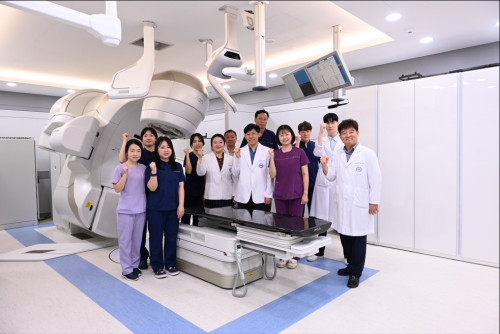
In recognition of Breast Cancer Awareness Month, we celebrate Hanyang University Hospital in Seoul, South Korea, for leading a simple yet meaningful change to enhance patient modesty in breast cancer care.
The challenge: Traditionally, patients were asked to change into standard hospital gowns before treatment—a routine step that often left them feeling exposed and uneasy. Beyond comfort, these gowns could also interrupt workflow, requiring therapists to readjust or remove fabric during patient setup.
The innovation: Technology meets humanity. Recognizing the emotional impact of this experience, the team introduced a new “clothing-on” protocol. Breast cancer patients are now encouraged to wear their own suitable clothing, such as a plain, light-colored t-shirt, that allows for treatment positioning while maintaining modesty.*
This approach is used with Brainlab ExacTrac Dynamic, a state-of-the-art positioning and monitoring system that combines surface-guided and image-guided technology for submillimetric accuracy.
Benefits at a glance with the new "clothing-on" protocol according to the Hanyang University Hospital:
- Preserves patient modesty and comfort
- Enables setup with ExacTrac Dynamic without the need for permanent tattoos or skin marks
- Streamlines workflow and reduces setup time
In their words: “What matters most is that our patients feel comfortable throughout the treatment process. With the new system, we can ease much of their burden, and that gives us great fulfillment in our work.” – Dr. Hae Jin Park, Radiation Oncologist, Head of Radiation Oncology Department
“The fact that patients no longer need to repeatedly change clothes or have skin markers drawn is one of the most satisfying improvements. It not only shortens the setup time, but also enhances patients’ overall quality of life. Since we no longer use ink, the treatment room stays cleaner and more pleasant, and maintenance is much easier. For breast cancer patients especially, some used to feel uncomfortable or even refused treatment when assigned to a male therapist. Now, those concerns have been resolved, which brings peace of mind to both patients and to us as providers.” – Je Hyeok Lee, Radiation Therapist
“What I like about receiving radiation therapy at Hanyang University Hospital is that, except for the simulation session, I can wear a white t-shirt during treatment. Since there are male radiation therapists, it could feel a bit embarrassing to have daily treatments, but with this approach, that’s not an issue.” – Breast cancer patient, Hanyang University Hospital (via User Blog)
Honoring Breast Cancer Awareness Month with action: This initiative reflects the heart of awareness: turning empathy into everyday improvement. It shows that innovation isn’t always about new technology—sometimes it’s about using what we already have to make care more human.
Please join us in celebrating the Hanyang University Hospital for showing that true innovation blends technology, empathy and everyday action—especially during a month dedicated to breast cancer awareness and advocacy.
The statements above represent personal opinions and experiences. These statements may not be supported by scientific evidence or peer-reviewed research. For verified information about the device, please refer to the manufacturer's official documentation. *The workflows mentioned may deviate from the workflows recommended by Brainlab.
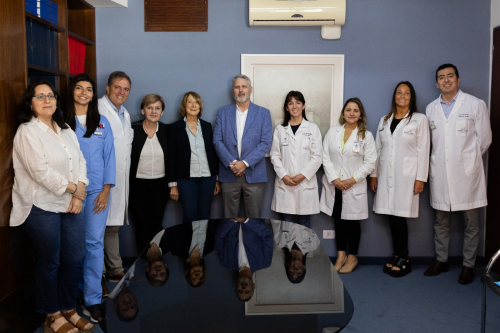
For more than a decade, Instituto Zunino in Córdoba, Argentina has been recognized as a regional reference center for high-precision radiotherapy. Built on long-standing clinical expertise and a strong culture of quality, the center has developed a mature SRS and SBRT program that continues to evolve through structured processes, external validation and a commitment to shared learning.
The team’s journey with Brainlab technology began in 2009 with iPlan RT and expanded in 2011 with ExacTrac X-Ray. Today, RT Elements is clinically adopted across the department of four treatment machines, supported by ExacTrac Dynamic—forming the technical backbone of daily practice.
A benchmark for quality: Novalis Certification
At Instituto Zunino, maintaining excellence means welcoming independent evaluation. First Novalis Certified in 2016, and successfully re-certified in 2020 and 2025, the team has consistently demonstrated its commitment to quality, safety and transparency. The most recent re-certification reinforces the center’s alignment with international standards and its place within the Novalis Certified community.
Why certification matters—in their own words
Silvia Zunino, MD, PhD, Director and Founder of Instituto Zunino and Fundación Marie Curie, explains: “Novalis Certification confirms that we work according to the same standards as leading centers in the United States and Europe. It gives us confidence in our methods and supports continuous improvement.”
Daniel Venencia, PhD, Head of Medical Physics, adds: “Even as an experienced institution, having our work audited helps us identify opportunities to improve. Clearly defined protocols and external review ensure our patients receive the best possible treatment.” Motivated by his commitment to excellence in SRS and SBRT and to support his colleagues, Daniel Venencia has now joined the Novalis Certification Program team as an auditor.
Beyond the clinic: sharing expertise to advance the region
Instituto Zunino’s impact extends beyond its own walls. Through Fundación Marie Curie, the team actively supports regional development by sharing protocols, workflows and clinical experience with the wider medical community. Every two years, the foundation hosts an internationally recognized SRS & SBRT congress (Congreso sobre Avances Integrados en Oncología, Radiocirugía y Física Médica: Innovación y Precisión en el tratamiento del cancer), bringing together physicians, physicists and researchers for high-level exchange. A dedicated hands-on workshop focused on Brainlab technology offers open insight into clinical workflows, physics considerations and decision-making processes—earning a strong reputation across the region. As Daniel Venencia notes: “Advancing treatment techniques, software, automation and artificial intelligence—and helping others do the same—is how we move the field forward together.”
Stories from the Circle: leadership through openness
Instituto Zunino shows that leadership in radiosurgery and radiotherapy is not defined by outcomes alone. By combining long-standing expertise with education, openness and a sustained commitment to Novalis Certification, the team actively contributes to raising standards across the region.
We’re proud to share Instituto Zunino’s story and to recognize the team’s ongoing commitment to collaboration, clinical rigor and patient-centered care.
The statements made by the clinician represent their personal opinion and experience. These statements may not be supported by scientific evidence or peer-reviewed research. For verified information about the device, please refer to the manufacturer's official documentation.
Picture: ©Instituto Zunino, Córdoba, Argentina
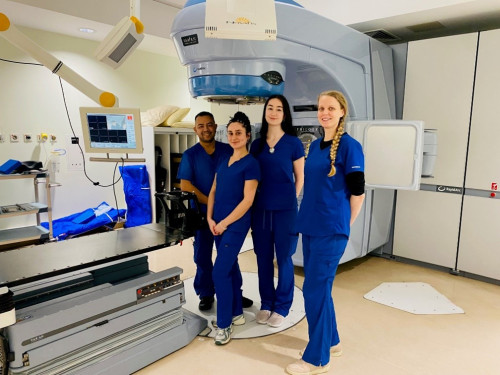
St. Luke’s Radiation Oncology Network: Leveraging Brainlab advanced stereotactic planning and image-guided patient positioning and monitoring to support brain and spine radiosurgery.
As Ireland’s largest public radiation oncology provider, St. Luke’s Radiation Oncology Network operates across three sites in Dublin, Ireland. Two of the centers are located on the campuses of major acute hospitals: St. James and Beaumont. The Beaumont Hospital site serves as the national referral center for craniospinal and skull base radiosurgery treatment, delivering specialized care for complex intracranial and spinal conditions.
The challenge: Achieving the seemingly unachievable. With rising demand for both intracranial and spine radiosurgery, the Beaumont RCSI Cancer Centre team needs to deliver precise, consistent treatments in both routine and high-risk scenarios while maintaining efficiency across a high-volume clinical schedule. This becomes especially critical in spine radiosurgery, where clinicians aim to deliver a sufficiently high dose to control the tumor while sparing the spinal cord just millimeters away. Achieving this balance requires a highly advanced algorithm—one that can sculpt dose in a concave target such as the vertebrae and create high-gradient plans that protect the cord without compromising tumor coverage. Once the optimal plan is created, the patient needs to be correctly positioned and monitored throughout treatment to enable intended delivery, with submillimetric accuracy from start to finish if needed. Multidisciplinary collaboration and robust high-quality technology are essential for this busy center that treats many different indications, from purely palliative to extremely complex radiosurgery.
The innovation: “Brainlab technology is deeply integrated into Beaumont RCSI Cancer Centre’s radiosurgery department.” Central to the Network’s approach are Elements Radiosurgery Solutions and ExacTrac, a configuration that supports complex radiotherapy planning, precise patient positioning and monitoring for a wide range of conditions from spinal metastases to intracranial metastases and benign intracranial conditions (including arteriovenous malformations, or AVMs, vestibular schwannomas and trigeminal neuralgia).
The intracranial radiosurgery program began using Brainlab solutions in 2013 and Beaumont RCSI Cancer Centre was the first in Europe to offer frameless radiosurgery treatments for trigeminal neuralgia. Brainlab Elements was introduced in 2018, initially used to treat multiple brain metastases, and became the primary planning platform for central nervous system cases in 2022. Single isocenter planning for multiple brain lesions enabled more consistent scheduling and workflow efficiency for a busy center treating a wide range of conditions.
The Beaumont RCSI Cancer Centre features the St. Luke’s Network’s flagship linac, Delvin, named after a river in Ireland through a patient-led naming initiative. This linac is equipped with ExacTrac which through image guidance allows for reduction in setup margins, making it very attractive to all consultants.
There is constant high demand for Delvin treatment slots and the ability to treat multiple brain metastases with a single isocenter has been practice changing for the Network. Today, nearly a third of the Network’s metastatic brain patients are treated using Elements Multiple Brain Mets SRS with a single isocenter.
Elements Radiosurgery Solutions have become a cornerstone of the Network’s rapidly expanding spine radiosurgery program. Since patients cannot be in the same position for their MR and CT scans, Elements Curvature Correction Spine—a dedicated deformable co-registration tool—enables them to use information from both modalities to better define the spinal anatomy and targets. In combination with AI-powered extra-cranial segmentation, organs at risk can be easily segmented.
In their words: “Our spine radiosurgery service has taken off over the last couple of years. We have designed a country-wide clinical trial to evaluate the safe dose escalation for patients with spinal metastases which is reaching our accrual targets much faster than expected.” — Professor Clare Faul, Consultant Radiation Oncologist at St. Luke’s Radiation Oncology Network.
Plans are generated using Elements Spine SRS, which enables accurate dose plan optimization and calculation with a Monte Carlo algorithm, which the team considers the most significant gain.
“All two-fraction patients are planned exclusively in Elements Spine SRS. Internal plan comparisons show a far better conformity to the target and sparing of organs at risk for those plans created in RT Elements. Possibly the most significant gain is the ability to optimize and calculate with a true Monte Carlo algorithm. With the newest software release, the fast Monte Carlo allows us to optimize and calculate with high accuracy in less than 20 minutes. The dedicated optimizer is extraordinary, too. We have been able to dose escalate in high-risk patients, where over 50% of the target is made of the gross target volume (GTV), without compromising proximal organs at risk. We get very excited every time we achieve the seemingly unachievable.” — Dr. Christina Skourou, Senior Physicist at St. Luke’s Radiation Oncology Network.
Treating so close to the spinal cord, nerve roots and esophagus are inherently challenging. For this reason, early on, the team performed extensive setup validation to establish safe and realistic planning target volume (PTV) margins. They would also acquire multiple CBCTs during each treatment fraction, but as they gained confidence in ExacTrac, they realized they could safely reduce patient imaging dose and shorten treatment time by relying on the device alone for intrafraction monitoring and correction. Today, spine stereotactic ablative radiotherapy (SABR) patients receive one posterior kV image to confirm the correct vertebral level, a CBCT to verify internal anatomy against plan and multiple ExacTrac kV images throughout treatment. Overall, treatment time per fraction is only slightly longer than for conventionally fractionated treatments.
The impact: Expanding access to radiosurgery for patients with complex brain and spine conditions. Together, Elements Radiosurgery Solutions and ExacTrac offer the Beaumont team greater confidence to deliver radiosurgery in high-risk scenarios. Consistent target definition and high-quality dose planning, together with precise patient positioning and continuous monitoring, enable submillimetric accuracy throughout treatment. The high level of accuracy supports evolving treatment pathways and allows radiosurgery to be integrated into clinical decision-making across a wider array of conditions.
St Luke’s Radiation Oncology Network was the first center in Ireland to achieve Novalis Certification, underscoring its leadership in advanced stereotactic radiotherapy. “The Novalis Certified program has played an important role in quality assurance and patient safety at the Network by independently validating that stereotactic radiotherapy is delivered to the highest international standards” — Paul Davenport, Principal Physicist at St. Luke’s Radiation Oncology Network.